What Is Free Cash Flow? A Plain-English Guide
Ask ten investors what a company earns and most will point to net income. It is the headline number, but it is also the output of many accounting choices. Free cash flow answers a simpler question: after paying its bills and funding its equipment, how much cash did the business actually keep?
How to calculate it
The formula takes two lines from the cash flow statement:
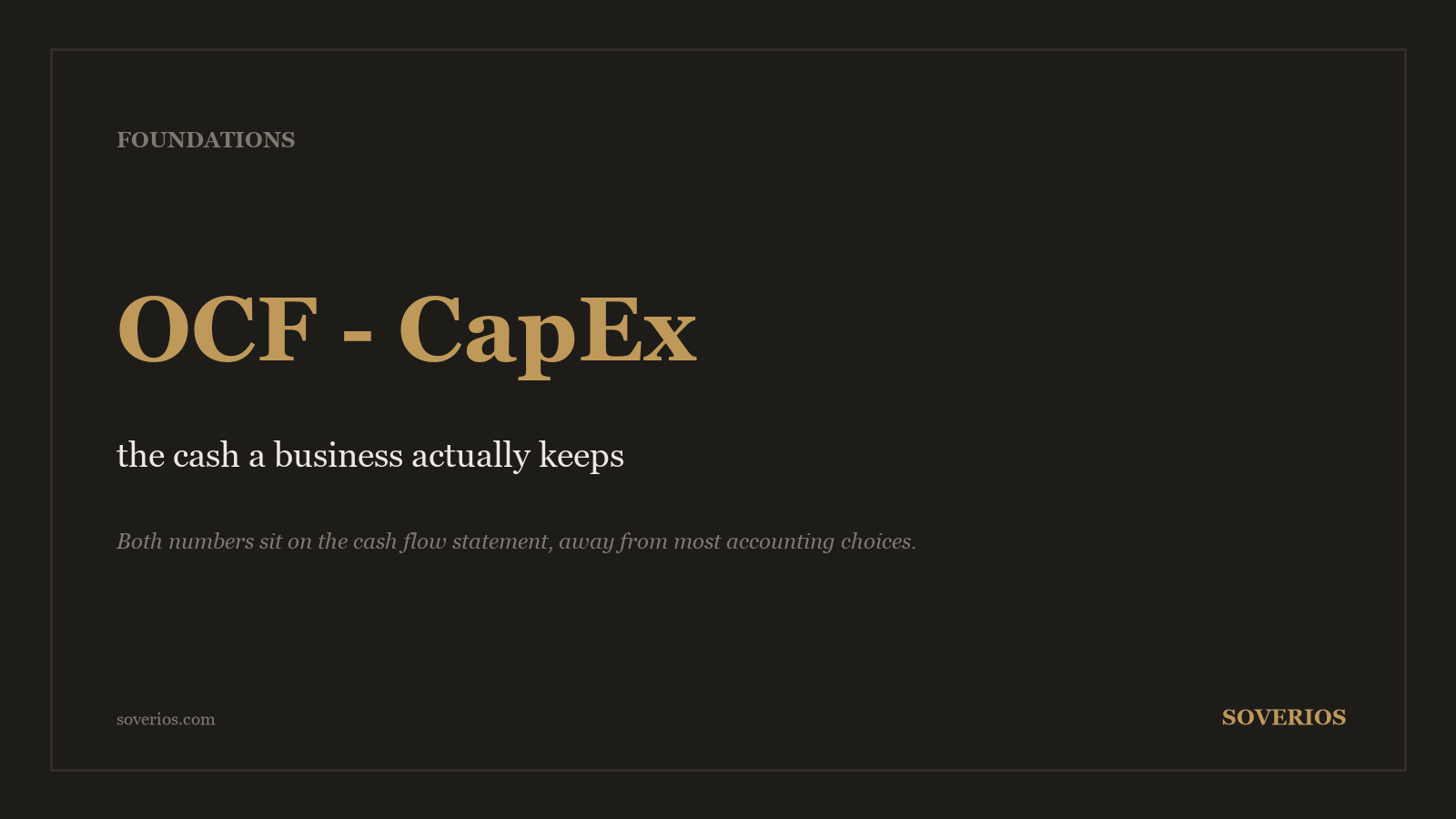
Free cash flow = operating cash flow - capital expenditures
Take a company that reports 100 million dollars of cash flow from operations and spends 30 million on capital expenditures during the same year. Its free cash flow is 70 million dollars. That is the cash available to pay dividends, buy back shares, repay debt, or build reserves.
Why investors watch it closely
Net income can be shaped by depreciation schedules, one-off charges, or revenue recognition choices. Cash movements are harder to dress up. When earnings rise year after year while free cash flow stays flat or negative, that gap deserves an explanation before you invest.
The reverse also matters. Some businesses look expensive on a price-to-earnings basis but generate far more cash than their reported earnings suggest. Free cash flow helps you spot both situations.
What it does not tell you
A single year of free cash flow proves little in either direction. Capital-intensive businesses alternate heavy investment years with harvest years, and a company can inflate FCF temporarily by underinvesting in its own operations. Look at the trend across five years or more, and compare it with how much the business needs to reinvest just to stand still.
Frequently asked questions
Is free cash flow the same as profit?
No. Profit (net income) follows accounting rules and includes non-cash items like depreciation. Free cash flow measures actual cash generated after investments, so the two can differ widely in a given year.
Where do I find free cash flow in a company's reports?
On the cash flow statement of the annual or quarterly report. Take cash flow from operating activities and subtract capital expenditures. Some companies report FCF directly, but checking the calculation yourself is safer.
Can free cash flow be negative for a good company?
Yes. A company investing heavily in growth can show negative FCF for years. The question is whether those investments earn good returns later, not the negative number by itself.
Educational content only, not investment advice. See our methodology and disclaimer.